

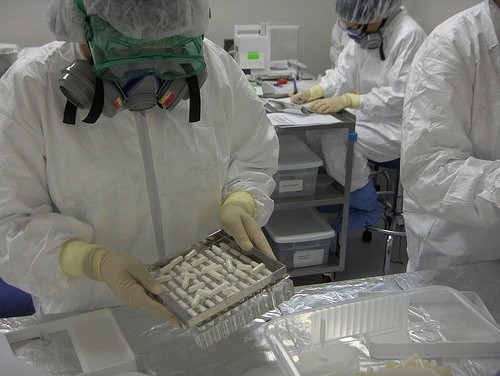

Many people are unaware that Pharmaceutical Companies invest, on average, 500 million pounds to develop a new medicine or drug. Many of these drugs never even get near to the final stages. It takes up to 20 years for a new drug to be licensed for public use from its conception. So, what has to happen before a new drug can be sold at a pharmacist or be prescribed by a doctor?
The MHRA have strict laws to control every stage. Everything about a study, including the advertisements, has to be approved by an ethical review committee. They are made up of scientists, doctors and lay people who have the power to halt a study and demand changes. After years of laboratory testing, it is mandatory for these compounds to be given firstly to live animals. The drug companies have no option as the law demands it. Sometimes side effects are found in animals and the developing study has to be abandoned.
Whilst the public may know more about the animal testing phase, they are not so aware of the human healthy volunteer trials known as studies. Thousands of volunteers participate in studies of new and reformulated medicines every year. This article shows why volunteers can receive hundreds or thousands of pounds in reimbursement for their time and effort.
Healthy volunteers are recruited from the public. Advertising targets certain people groups. There are many exclusion criteria to overcome for a candidate to be accepted on to the database of volunteers. Their weight, height, blood pressure and medical history are assessed, together with a detailed report from their own doctor. The general practitioner can deselect their patient without giving any reason. The pharmaceutical company pays thousands of pounds every year to the NHS for this medical service. This ensures that volunteers do not withhold important medical information and put their lives at risk to obtain a financial reward.
When a suitable study is available, hundreds of volunteers are mailed with brief details and dates. They are not informed how much money is involved. They then need to pass a medical, including height, weight, blood pressure, ECG, blood and urine tests. They also need to pass a medical examination by the physician in charge of the study. The slightest anomaly can exclude a volunteer. They are withdrawn and given a minimal payment for their attendance. Usually, only 15% of the study candidates reach this far. Twenty or less volunteers are now left to participate in the study. There are normally three separate study admissions over three months with repeat groups taking different doses of the drug. The volunteers will all have undergone certain restrictions for various periods of time. These include food, drink, alcohol and exercise. Blood tests will reveal any deviation in following the restrictions. Even an innocent mouthful of broccoli will be detected in the blood tests if it has been a restricted food.
After a week, the volunteers return for the study. They are admitted onto a ward for three or more days. They undergo another full medical. Any abnormalities bring further losses to the volunteers who are now called subjects. They remain on bed rest for the first six hours as the study drug or placebo is administered. Several doctors, a pharmacist and trained nurses are all present with the subjects for the first day and throughout the study. Recordings are made every thirty minutes and written in the patient records or CRF. Print outs are kept for the blood pressure and ECG. A cannula or tube is kept in the subject’s vein for twenty-four hours. This facilitates repeat blood samples and allows access for an intravenous drug to be injected in an emergency. Any adverse effects are investigated and documented immediately. If appropriate, the subject is taken off the study and given full payment. Volunteers may withdraw from a study at any time.
After completion of a study, the volunteers return for a post study medical. All the tests are repeated. Each volunteer has to be completely healthy to be released and paid for his or her participation. Some studies can require as many as twenty repeat visits to measure the levels of the test drug in the bloodstream.
Without these drug studies, simple aspirins, antibiotics, vaccinations, anaesthetics or even oxygen would not be available for sale or prescription. It’s thanks to all the healthy men and women volunteers that our lives are made much easier.
Pharmaceutical companies face enormous financial and time investments when developing new drugs, spending an average of 500 million pounds over up to 20 years, with many potential medications never making it to market due to strict regulatory oversight by the MHRA. The drug development process follows a rigorous sequence starting with laboratory testing, followed by mandatory animal trials where adverse effects can force companies to abandon years of research and investment. A crucial but lesser-known phase involves human healthy volunteer trials, where thousands of people participate annually in studies testing new medicines in exchange for substantial financial compensation.
The volunteer recruitment and selection process is extremely demanding, with strict medical criteria including assessments of weight, blood pressure, medical history, and GP approval, ultimately allowing only about 15% of initial candidates to pass through comprehensive screening. During actual studies, volunteers spend several days in hospital wards under intensive 24-hour medical supervision, undergoing constant monitoring every 30 minutes, frequent blood sampling through inserted cannulas, and detailed documentation of any reactions or side effects. The process concludes with thorough post-study medical examinations to ensure volunteers are completely healthy before receiving payment, with some studies requiring up to twenty follow-up visits to monitor drug levels, demonstrating that without these dedicated volunteers, essential medications like aspirin, antibiotics, and vaccines would not exist today.
Pharmaceutical companies invest an average of 500 million pounds and up to 20 years to develop each new drug, with many never reaching the market due to strict regulatory oversight by the MHRA. The development process follows a rigorous sequence that includes laboratory testing, mandatory animal trials (where adverse effects can force abandonment of the project), and human volunteer studies that most people are unaware of. The volunteer recruitment process is extremely selective, requiring candidates to pass comprehensive medical screenings including weight, blood pressure, medical history assessments, and GP approval, with only about 15% of initial applicants ultimately qualifying for studies.
During the actual trials, volunteers spend several days in hospital wards under intensive medical supervision, receiving constant monitoring every 30 minutes, frequent blood sampling through inserted tubes, and detailed documentation of any reactions or side effects. The process concludes with thorough post-study medical examinations to ensure complete health before volunteers receive their substantial financial compensation, with some studies requiring up to twenty follow-up visits. Without these dedicated volunteers who undergo such rigorous testing procedures, essential medications like aspirin, antibiotics, vaccines, and anesthetics would not be available to the public today.
Pharmaceutical companies invest an average of 500 million pounds and up to 20 years to develop each new drug, with many never reaching the market due to strict regulatory oversight by the MHRA. The development process follows a rigorous sequence that includes laboratory testing, mandatory animal trials (where adverse effects can force abandonment of the project), and human volunteer studies that most people are unaware of.
The volunteer recruitment process is extremely selective, requiring candidates to pass comprehensive medical screenings including weight, blood pressure, medical history assessments, and GP approval, with only about 15% of initial applicants ultimately qualifying for studies. During the actual trials, volunteers spend several days in hospital wards under intensive medical supervision, receiving constant monitoring every 30 minutes, frequent blood sampling through inserted tubes, and detailed documentation of any reactions or side effects.
The process concludes with thorough post-study medical examinations to ensure complete health before volunteers receive their substantial financial compensation, with some studies requiring up to twenty follow-up visits. Without these dedicated volunteers who undergo such rigorous testing procedures, essential medications like aspirin, antibiotics, vaccines, and anesthetics would not be available to the public today.

