

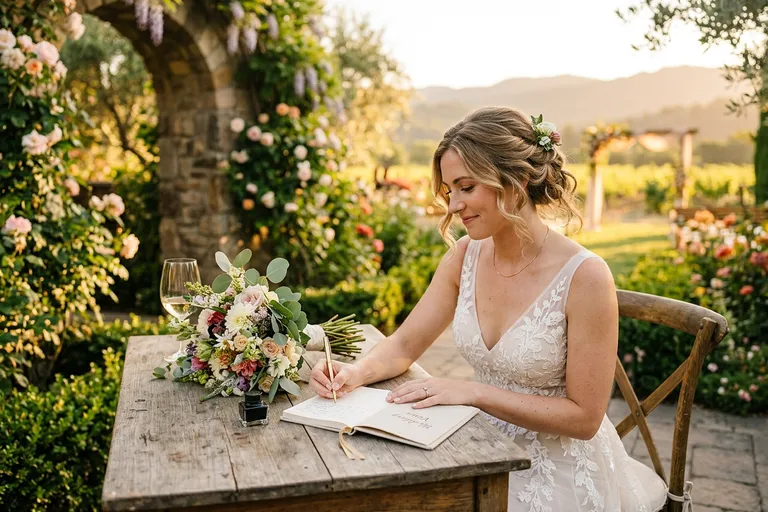

Writing your own wedding vows can feel overwhelming, but it’s one of the most meaningful ways to personalize your ceremony. With a little planning and these practical tips, you’ll create vows that truly capture your love story.
1. Start Early, But Not Too Early


Begin writing about 6-8 weeks before your wedding. Starting too early means your feelings might change, but waiting until the last minute creates unnecessary stress. Trust me, you’ll want time to revise and practice.
2. Decide on Length Together
Coordinate with your partner so one of you doesn’t speak for five minutes while the other says three sentences. Aim for 1-2 minutes each, which is roughly 150-300 words.
3. Choose Your Tone


Will your vows be funny, deeply emotional, or a mix of both? Discussing this beforehand prevents awkward moments where one person is cracking jokes while the other is sobbing. I’ve seen it happen, and it’s not pretty.
4. Brainstorm Your Love Story
Write down how you met, your first date, when you knew they were “the one,” and your favorite memories together. These details will become the heart of your vows. Don’t worry about organizing them yet – just get everything on paper.
5. Include What You Love About Them


Be specific about their qualities that make your heart skip a beat. Instead of saying “you’re kind,” mention how they always remember to ask about your mom’s doctor appointments.
6. Make Promises for Your Future
This is the “vow” part of wedding vows. Promise specific things like always making coffee in the morning, supporting their dreams, or never going to bed angry. Make them realistic – you probably can’t promise to never be grumpy before coffee.
7. Skip the Inside Jokes


Your guests want to feel included in this moment. Save the references that only you two understand for your private vows later.
8. Write Multiple Drafts
Your first draft will probably be terrible, and that’s completely normal. I always tell couples to write three versions – one that’s too long, one that’s too short, and then find the perfect middle ground. Each draft will get better as you figure out what you really want to say.
9. Read Them Out Loud


Words that look perfect on paper might feel clunky when spoken. Practice reading your vows aloud to catch awkward phrasing and ensure they flow naturally.
10. Keep It Personal, Not Perfect
Your vows don’t need to sound like Shakespeare wrote them. Use your own voice and the words you’d actually say to your partner. Authenticity beats eloquence every time.
11. Have a Backup Plan for Emotions
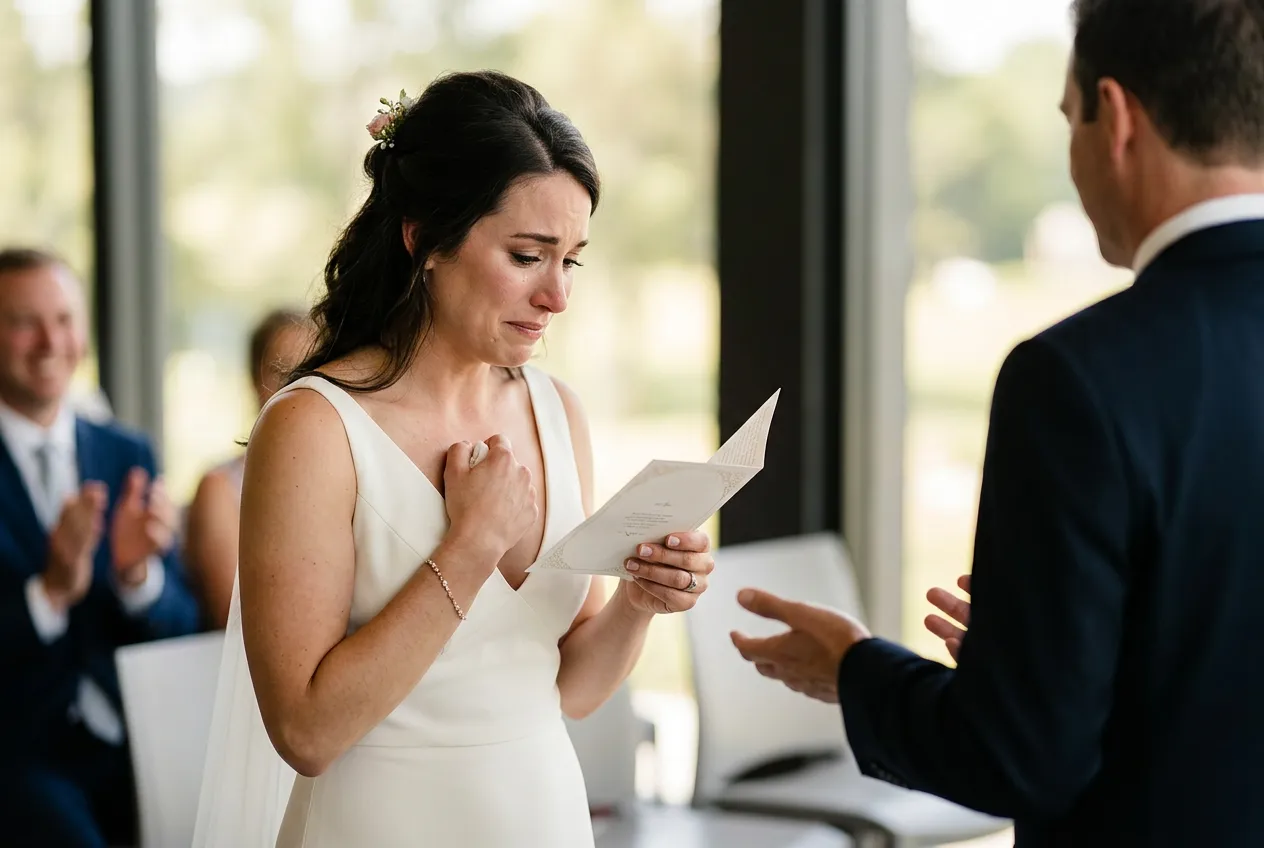

You might get too emotional to speak during the ceremony. Ask your officiant to read your vows for you if needed, or simply pause and take deep breaths. Everyone will understand – there’s not a dry eye in the house anyway.
12. Print Them in Large Font
Use at least 14-point font so you can read them easily while nervous and possibly teary-eyed. Print on nice paper that won’t shake loudly if your hands tremble.
13. Consider Writing Two Versions


Many couples write public vows for the ceremony and private, more intimate vows to share alone later. This lets you include deeply personal details without making your guests feel like they’re eavesdropping on a private conversation.
14. Don’t Reveal Everything Beforehand
Keep your vows secret from your partner until the ceremony. The surprise and genuine emotion make the moment much more powerful.
15. Include Gratitude


Thank your partner for specific things they’ve brought to your life. Maybe they taught you to be more patient, showed you new adventures, or simply made you laugh every single day. Gratitude adds depth to your vows beyond just promises for the future.
16. Avoid Comparisons to Past Relationships
This should be obvious, but you’d be surprised. Focus on your current relationship without mentioning exes or past heartbreaks.
17. Practice with a Friend


Read your vows to someone you trust for feedback. They can catch confusing parts, suggest improvements, or simply give you confidence that your vows are beautiful. Sometimes we’re too close to our own writing to see it clearly.
18. End with Your Main Promise
Finish strong with your most important commitment. This is what people will remember most, so make it count.
19. Bring Tissues and a Backup Copy
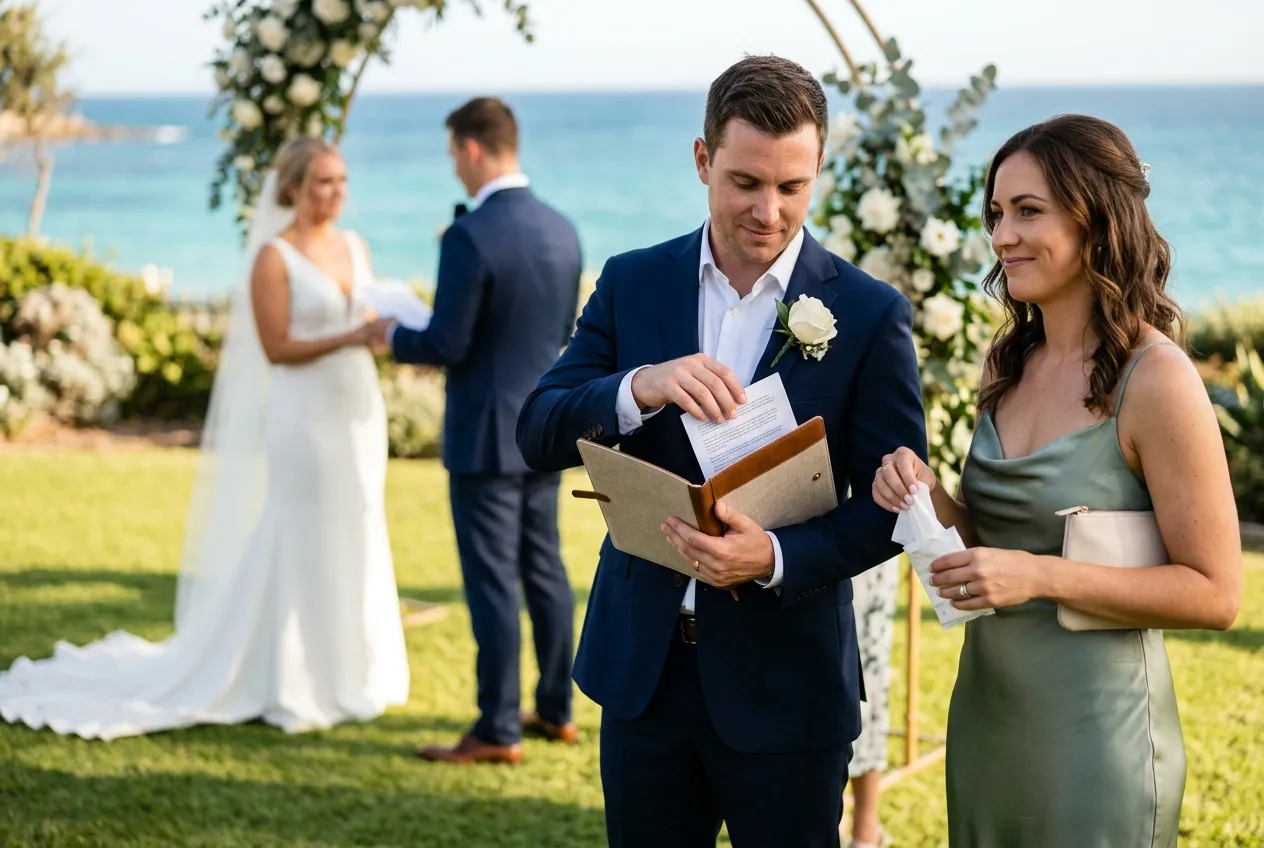

Tears are inevitable, and papers can get lost or blown away by wind. Give your officiant or wedding party a second copy just in case. I always keep extras in my emergency kit.
20. Don’t Stress About Perfection
If you stumble over words or forget a line, it’s okay. Your guests are rooting for you, not judging your public speaking skills. The love behind your words matters more than flawless delivery.
21. Save Them Forever


Keep your written vows in a special place and read them on future anniversaries. They’ll remind you of the promises you made and the feelings you had on your wedding day. Trust me, you’ll want to revisit these words years from now when life gets complicated and you need to remember why you chose each other.

